AI Automation for Pool & Spa Service Companies: Keep Every Route Full and Every Customer Happy

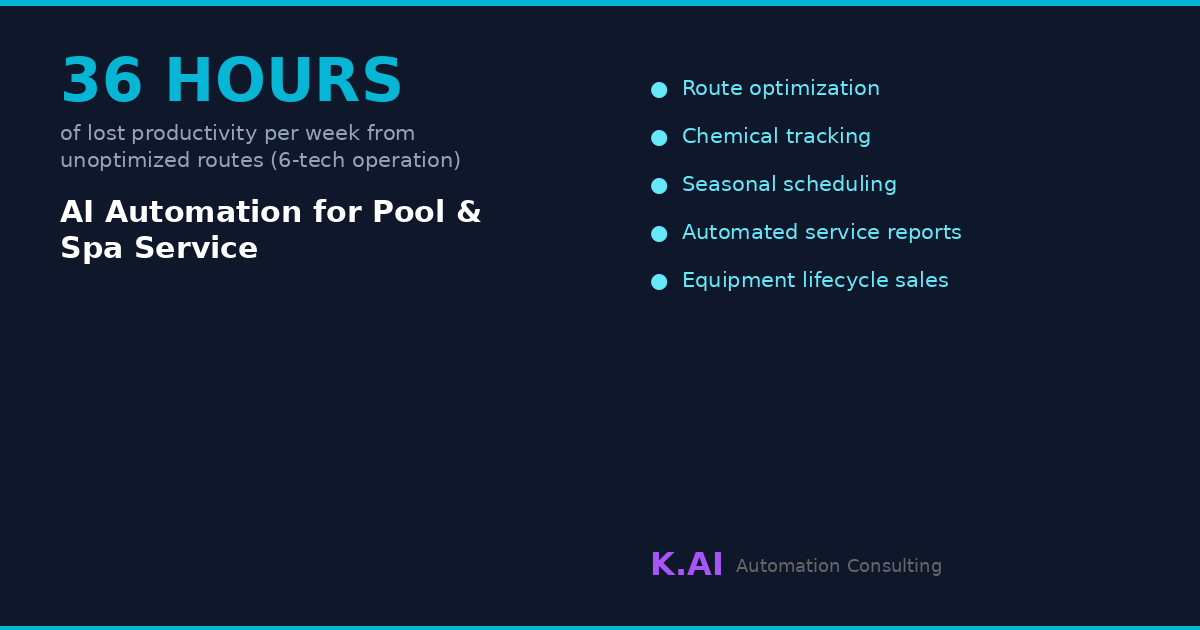
It is the first week of May. Your phone has been ringing since March. Every pool owner in the county wants an opening scheduled, and they all want it done by Memorial Day weekend. You have 6 techs and 400 customers. The math does not work unless every route is perfectly optimized, every chemical reading is tracked, and nobody falls through the cracks. But your routes were built two years ago. Since then you have added 80 customers, lost 30, and your best tech moved across town, which means his old route now has him driving past his first stop to get to his last one. You reorganize every spring, but by July the routes are messy again because new customers get slotted wherever there is an opening. ...
February 24, 2026 · Kenyon

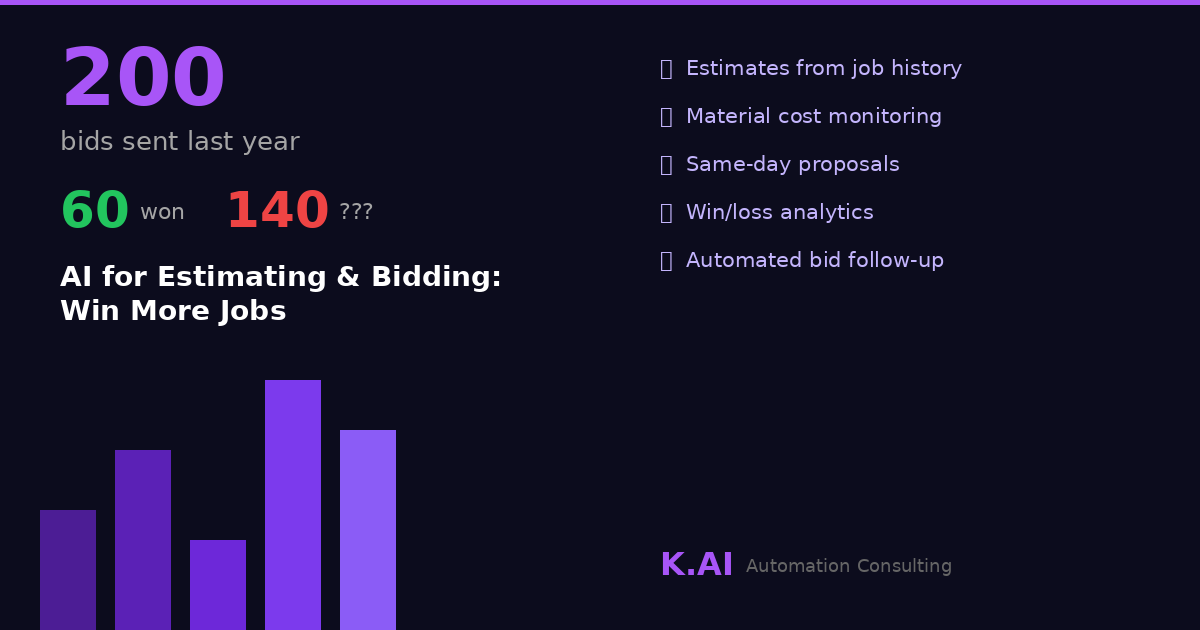
AI for Estimating and Bidding: Win More Jobs Without the Guesswork

You spent three hours on that estimate last Tuesday. Measured the site, calculated materials, priced out labor, figured in equipment rental, added your markup, and sent a clean proposal. Then you heard nothing for two weeks. Here is the part that stings: you do not know if you lost that job because your price was too high, too low, or because the customer just went with whoever responded first. You do not know because you do not track it. Almost nobody does. ...

February 23, 2026 · Kenyon

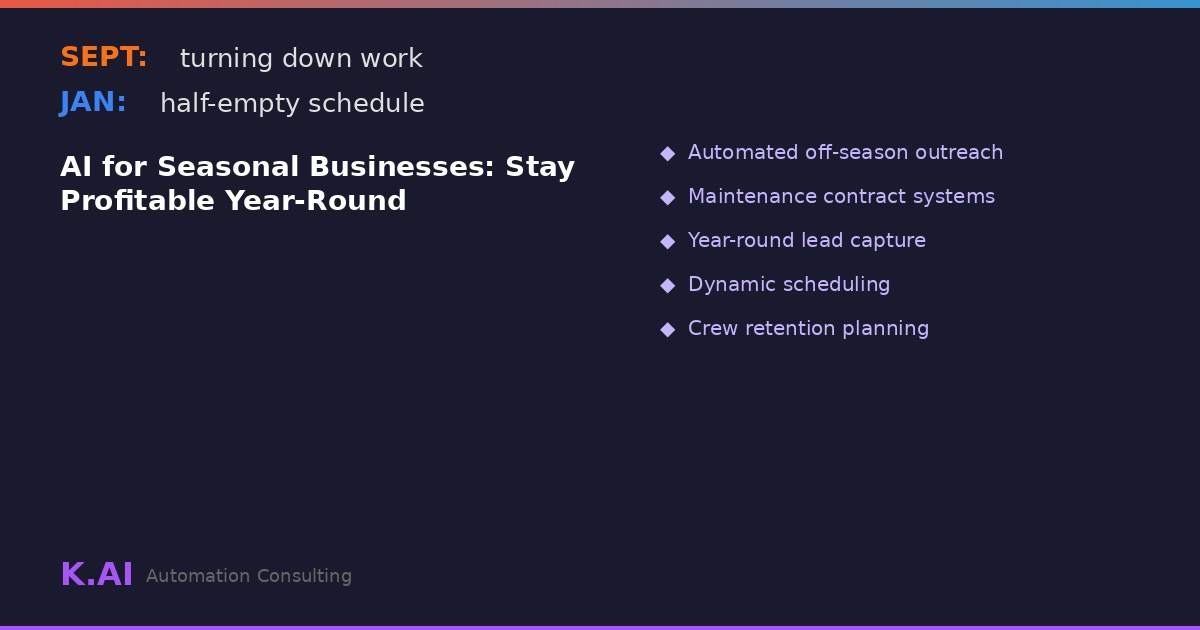
AI for Seasonal Businesses: How to Stay Profitable When the Phone Stops Ringing

You know the feeling. September hits and you are turning down work. Crews are booked solid. Revenue is strong. Then December arrives and the schedule is half empty. January is worse. You are dipping into reserves, wondering if you should lay off a crew member, and counting the days until spring. This cycle is not unique to one industry. It hits landscapers, concrete contractors, painters, pool service companies, tree care providers, roofers, and dozens of other trades that depend on weather and seasons. The work is out there for part of the year. The challenge is staying profitable during the other part. ...

February 22, 2026 · Kenyon

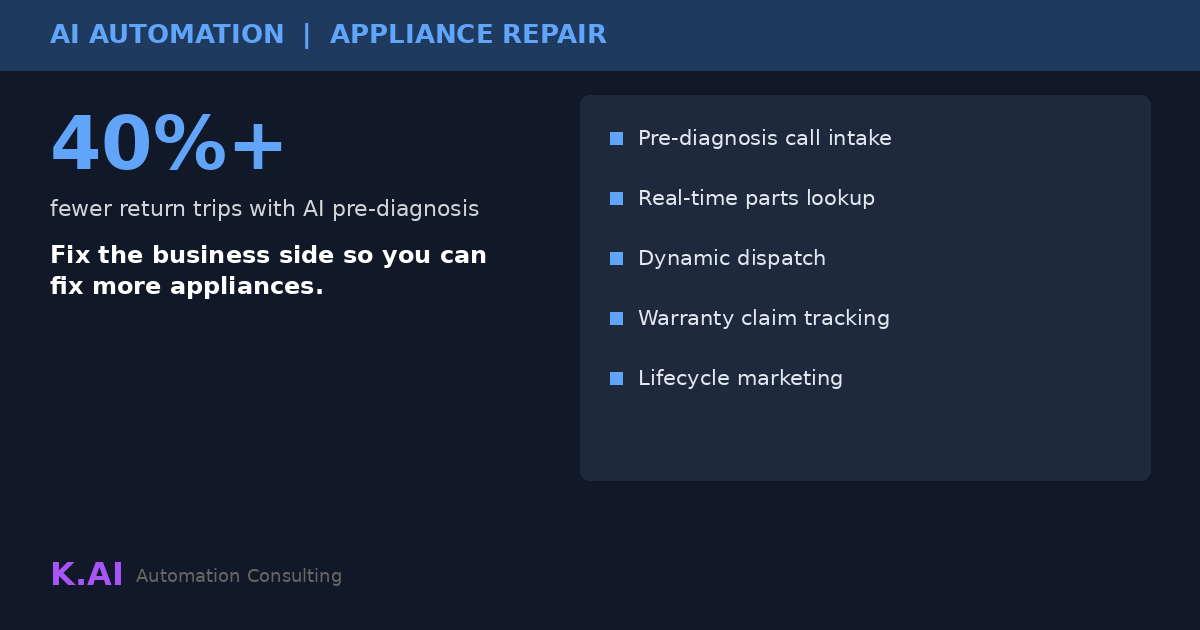
AI Automation for Appliance Repair: Fix the Business Side So You Can Fix More Appliances

A customer calls. Their refrigerator stopped cooling last night. Everything in it is going to spoil by tomorrow. They need someone today. Your tech is available this afternoon. But the customer called three companies before you picked up, and the first one already confirmed a 2 PM slot. You had the capacity. You just did not answer fast enough. Appliance repair is one of the most time-sensitive service industries. When a dishwasher floods a kitchen or an oven dies the day before Thanksgiving, customers are not comparison shopping. They are calling down the list until someone picks up and gives them a time. Speed wins. Every time. ...

February 21, 2026 · Kenyon

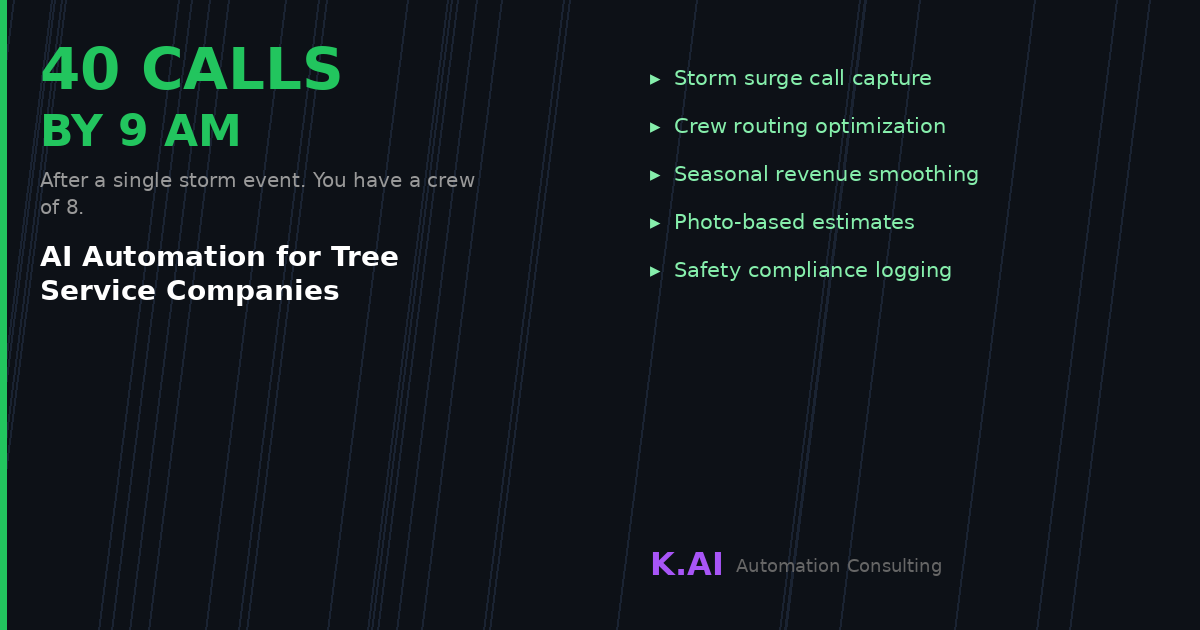
AI Automation for Tree Service Companies: Turn Storm Season Into Your Best Quarter

A big storm rolls through on a Thursday night. By Friday morning, your phone is ringing off the hook. Downed limbs, split trunks, trees leaning on fences and power lines. You have 40 calls by 9 AM and a crew of 8. Some of those calls go to voicemail. Some callers hang up and try the next company. By the time your office catches up on Monday, half of those emergency jobs went to whoever answered the phone first. ...

February 20, 2026 · Kenyon

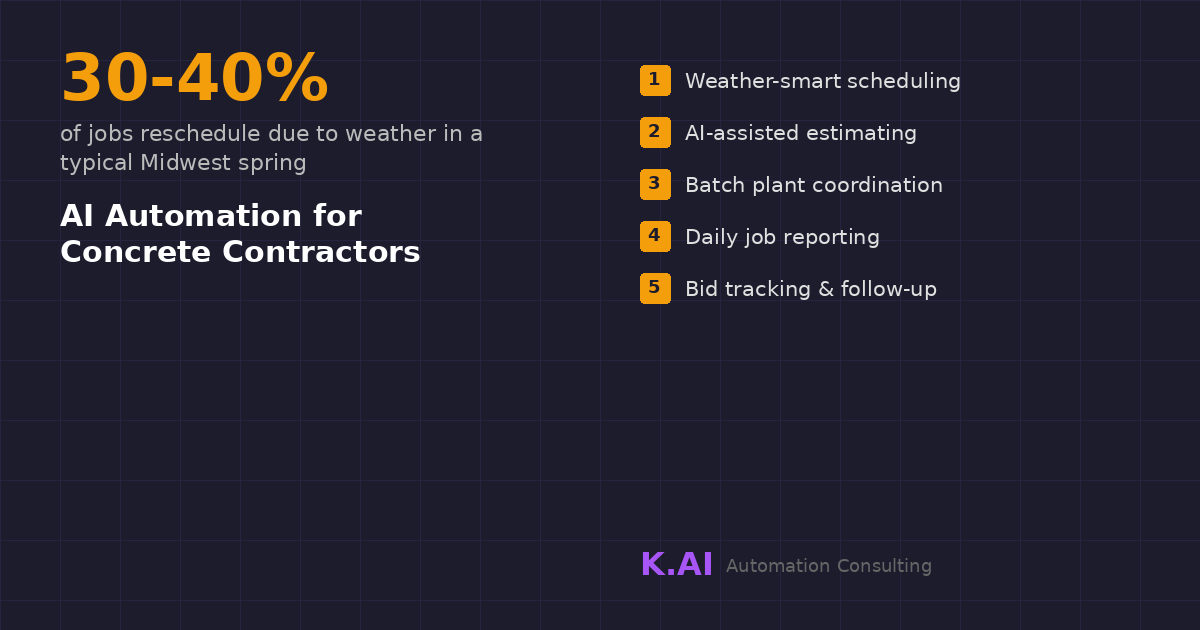
AI Automation for Concrete Contractors: Win More Bids and Keep Crews Moving

You know the math on every pour. Yards of concrete, rebar count, labor hours, finishing time. What you probably do not know is how many hours your office burns each week doing things that have nothing to do with concrete. Chasing down subcontractor availability. Re-entering the same job data into three different systems. Calling the batch plant to confirm delivery windows. Following up on bids you sent two weeks ago. Rebuilding a schedule every time the forecast changes. ...

February 19, 2026 · Kenyon

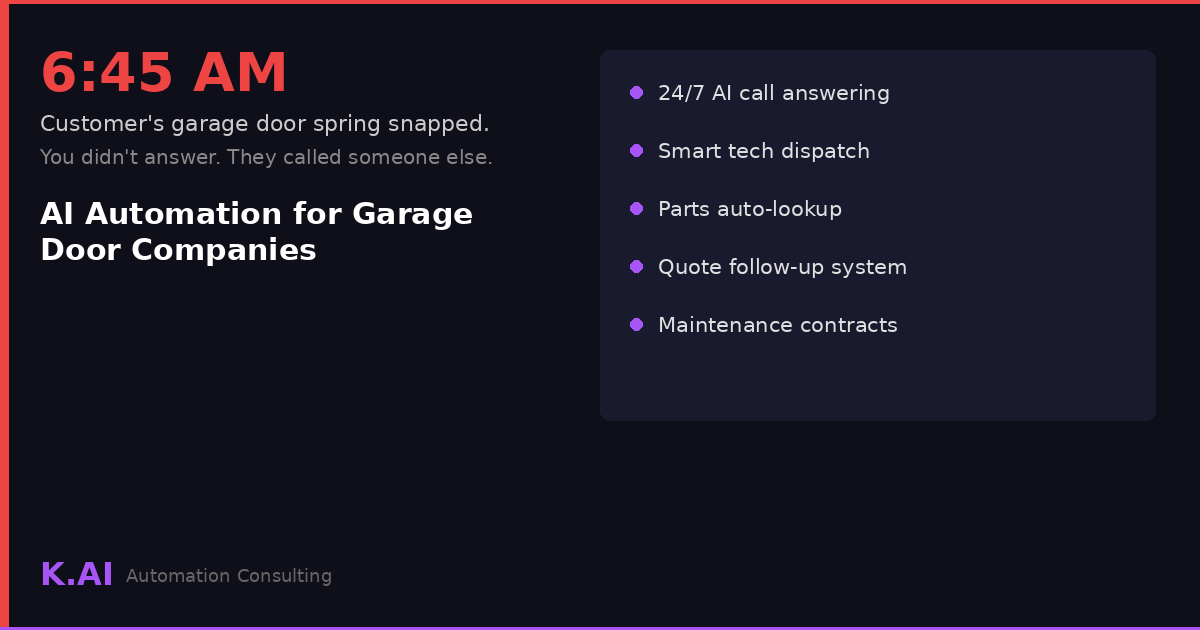
AI Automation for Garage Door Companies: Handle More Calls Without Hiring More People

It is 6:45 AM on a Monday. A customer’s garage door spring snapped and their car is trapped inside. They call your shop. Nobody picks up because your office does not open until 8. They call the next company in Google. That company answers. That company gets the $400 repair. Garage door companies live and die by phone responsiveness. Between emergency repairs, seasonal installation surges, and the constant churn of warranty callbacks, your office staff is already stretched thin. Adding more volume means adding more people, or it used to. ...

February 18, 2026 · Kenyon

AI Automation for Painting Companies: Stop Losing Jobs to Slow Estimates

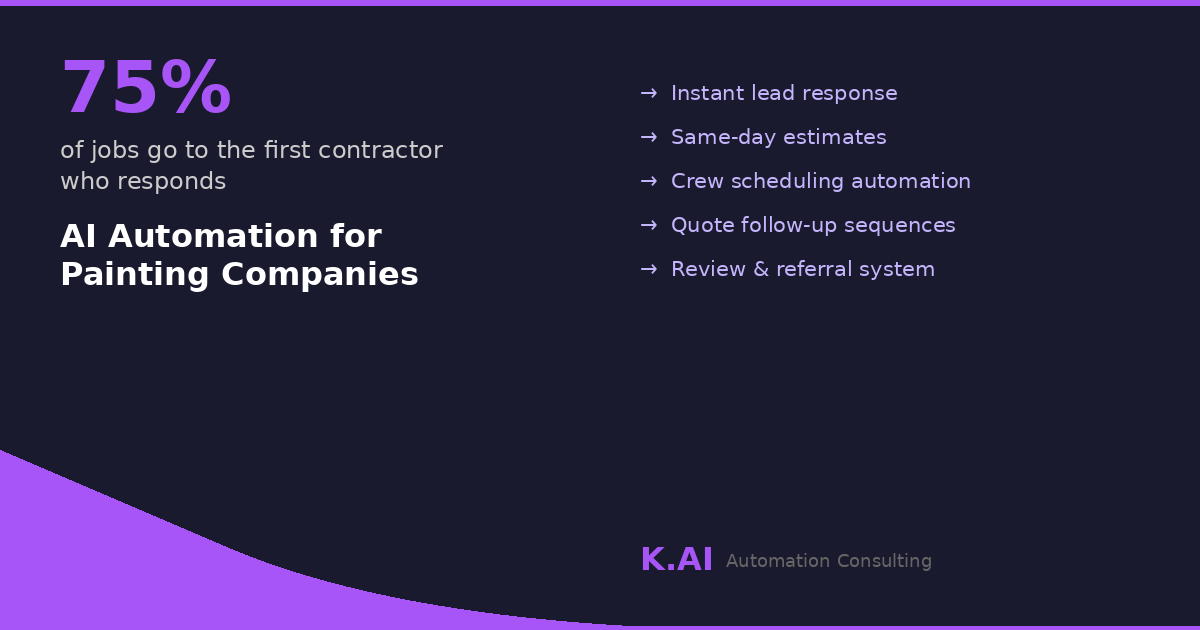
You quoted the job on Tuesday. The homeowner said they had two more painters coming out that week. By Thursday, you sent the estimate. By Friday, they had already signed with someone else. Not because your price was wrong. Not because your work is worse. You just took a day too long. For painting contractors running 5 to 15 crews, the biggest threat to revenue is not competition on price. It is competition on speed. The company that responds first, estimates fastest, and follows up consistently wins the job. And right now, most painting companies handle all of that manually, between job sites, voicemails, and sticky notes on a dashboard. ...

February 17, 2026 · Kenyon

What AI Implementation Actually Looks Like: A Week-by-Week Breakdown

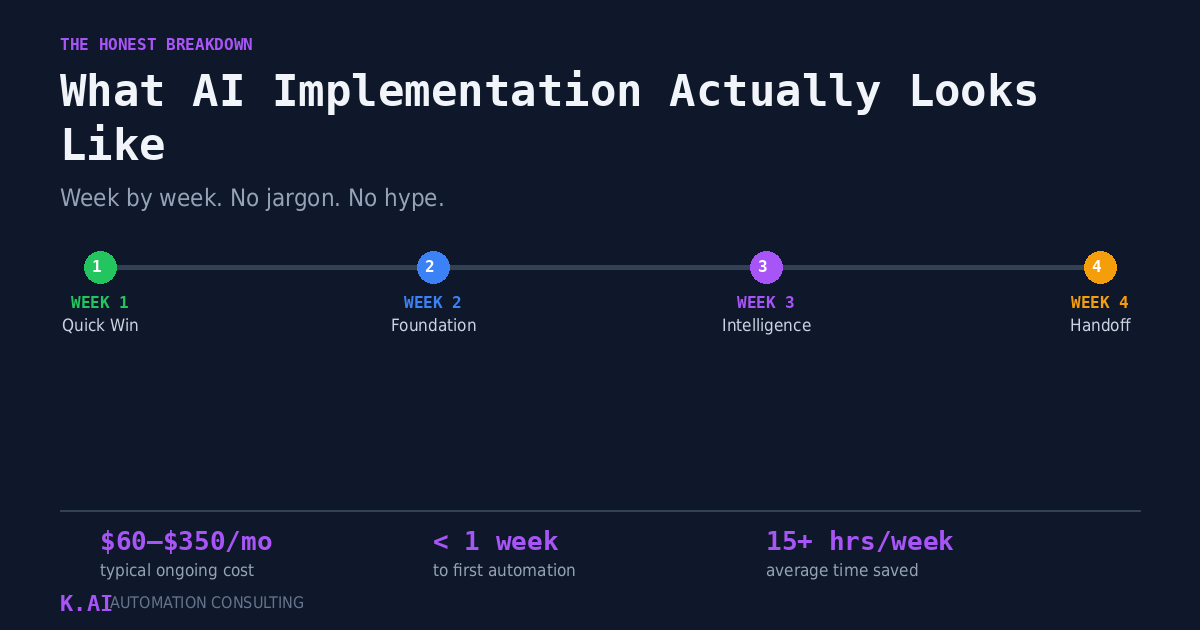
“I know AI could probably help my business. I just have no idea what that actually looks like.” We hear some version of this in almost every conversation with small business owners. They’ve read the headlines. They know competitors are adopting it. They might even use ChatGPT for drafting emails or brainstorming ideas. But taking the step from “using AI personally” to “AI running parts of my business” feels like a leap into the unknown. ...

February 16, 2026 · Kenyon

AI Automation for Small Trucking Companies: Keep Your Trucks Moving and Your Paperwork Under Control

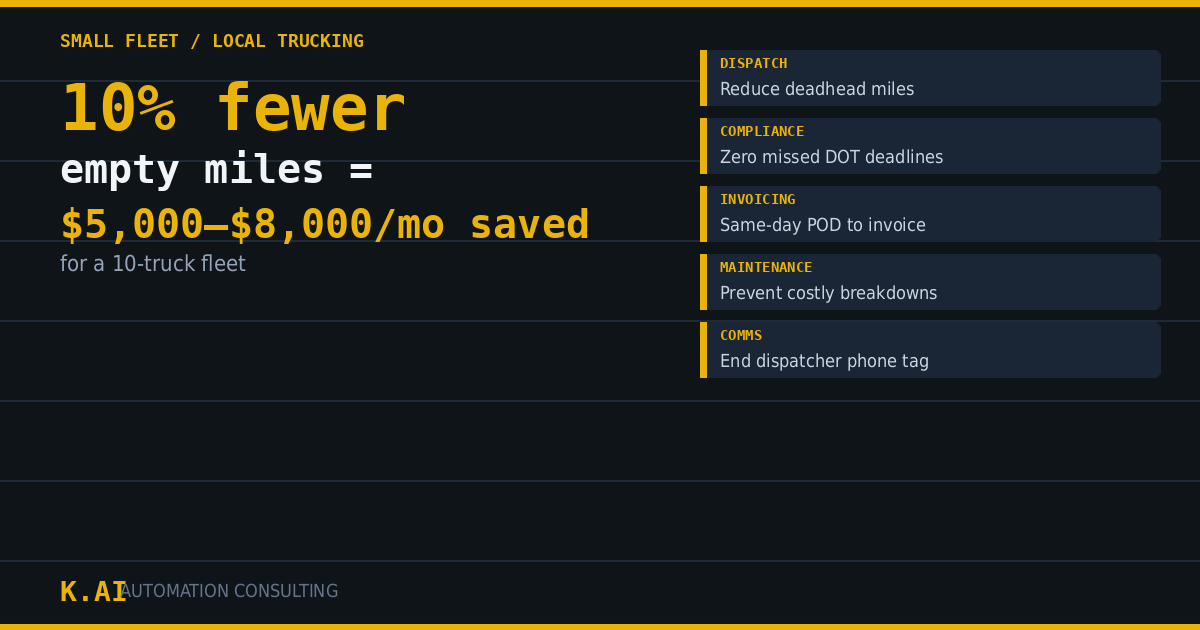
There’s a reason small trucking companies say they’re in the paperwork business, not the trucking business. A 10-truck fleet generates hundreds of documents per week: bills of lading, proof of delivery, fuel receipts, IFTA reports, driver logs, maintenance records, insurance certificates, and invoices. Then there’s DOT compliance, FMCSA filings, and the constant dance of dispatch coordination. Most small fleet owners started driving because they loved being on the road. Now they spend their evenings at a desk, buried in spreadsheets, chasing down missing paperwork, and wondering why their margins are thinner than last year. ...

February 15, 2026 · Kenyon
Free AI Assessment